Ask most grooms what their wedding ring is made of and the answer used to be simple. Gold, maybe platinum, perhaps silver if the budget was tight. That’s changed. A growing number of men now want a ring that says something about who they are, and a plain precious metal band doesn’t always do that. One of the more unusual answers to this is a ring made with a fragment of meteorite, and it’s no longer the niche choice it once was.
The appeal is easy to understand once you hold one. A meteorite ring contains material that formed in space and travelled for millions of years before landing on Earth. The metal is older than the planet you’re standing on. For a piece of jewellery meant to mark a lifelong commitment, that kind of longevity has a certain pull.
What a meteorite ring actually is
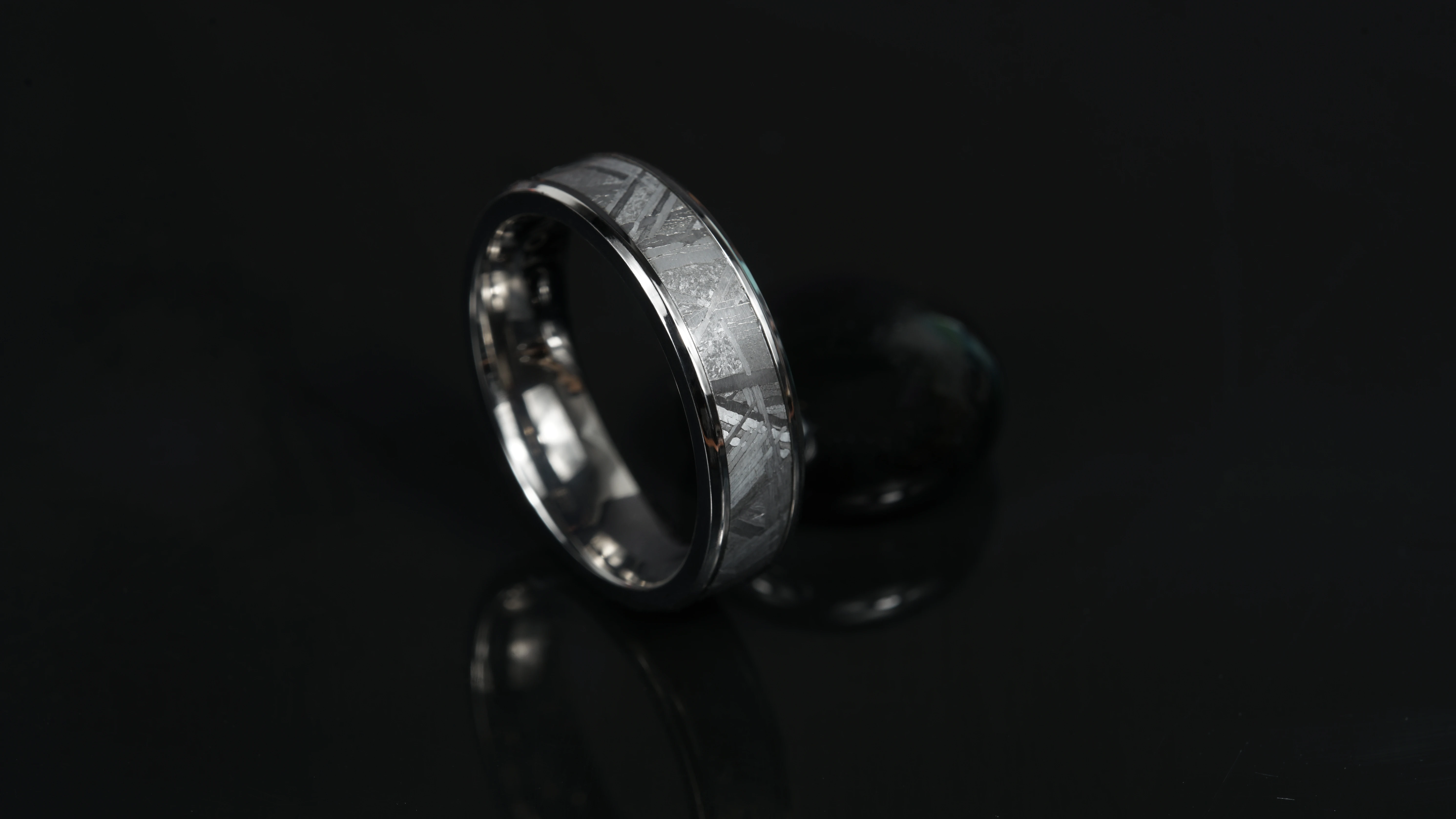
The meteorite in a ring isn’t usually the whole band. It’s an inlay, a section of genuine space rock set into a base of something hard-wearing like titanium or tungsten. How much meteorite you see is a matter of preference and budget. Some rings use a single strip down the centre with the base metal showing either side, while others wrap meteorite around the entire outer surface so the band reads as pure space rock from every angle. More meteorite generally means a higher price, since there’s more rare material and more cutting involved. Either way, the meteorite provides the look and the story, and the base metal provides the strength a wedding ring needs for daily life. The base does a quieter job too. It sits between the meteorite and your skin, which keeps the iron away from the sweat and oils that would otherwise wear at it over the years. Opting for a hypoallergenic base metal like titanium or black zirconium also suits people who react to the nickel content of the meteorite. The result is a piece that lasts longer and feels comfortable on the finger every day.
Most meteorite used in jewellery comes from one of two sources. Gibeon, found in Namibia, has a broader, bolder pattern with warm grey tones. Muonionalusta, found in northern Sweden near the Finnish border, has a finer, more intricate structure and often takes on a cooler blue-silver sheen once it is etched. When either is cut and acid etched, it reveals the Widmanstätten pattern, a lattice of interlocking lines that cannot be faked or manufactured. It only forms when metal cools over millions of years in space, which is to say it forms in conditions no workshop on Earth can reproduce. No two rings come out the same.
Why it suits a wedding ring in particular
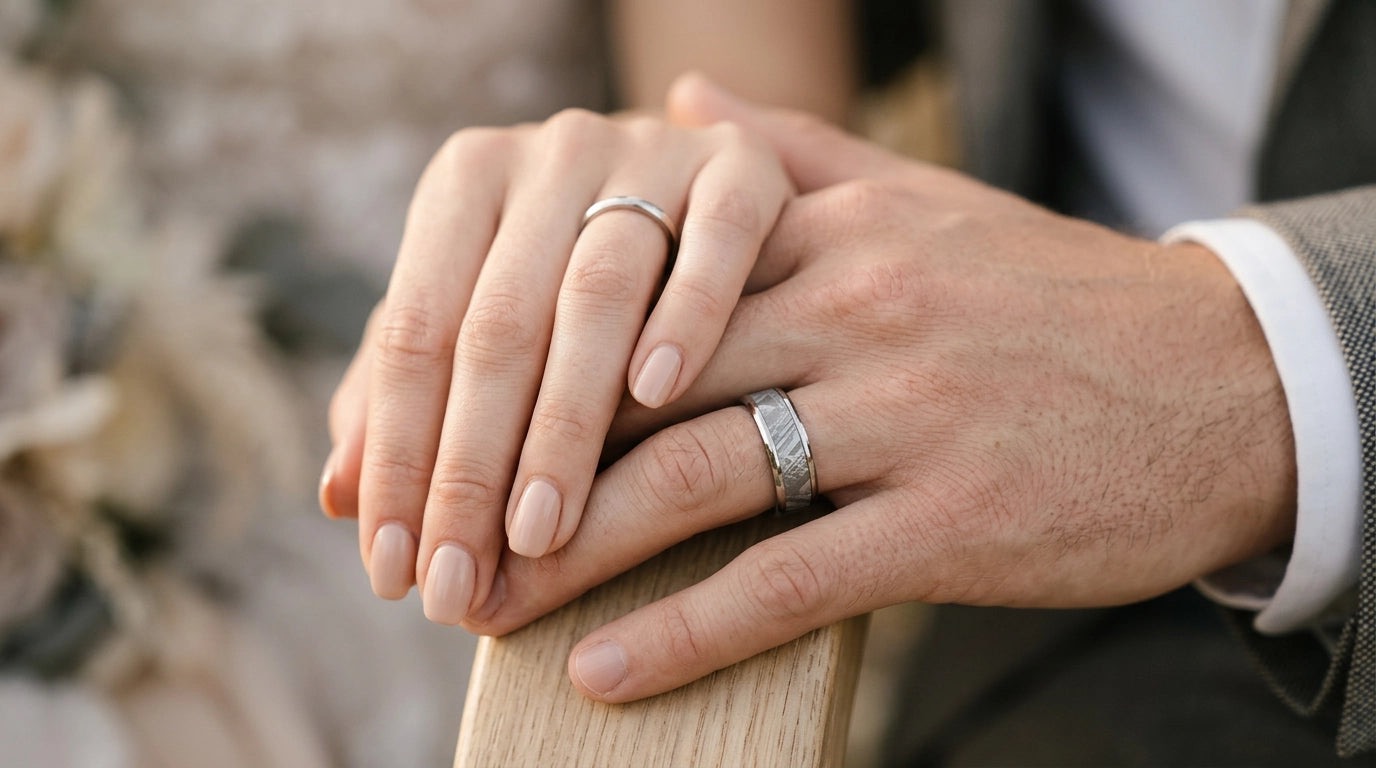
A wedding ring gets worn every day for decades, so the material matters more than it would for an occasional piece. Meteorite rings tend to land well with those who want something distinctive without it being loud. The pattern is subtle from a distance and only really shows itself up close, which suits someone who wants a talking point rather than a statement. There is also something fitting about a material that has lasted billions of years marking a commitment meant to last a lifetime, a connection that is not lost on couples choosing one.
The base metals
The meteorite sets the look, but the base metal it sits in shapes how the ring feels and wears. There are three common choices, and they each have a different character on the hand.
Titanium
Light, to the point where you can forget you’re wearing it. It’s strong, naturally hypoallergenic and warm to the touch, which makes it an easy ring to live with day to day.
Tungsten
Has real heft and weight, which some men prefer because it feels substantial on the finger. It’s extremely hard and holds a polish well, so it keeps its finish through years of wear.
Black zirconium
Sits between the two for weight, with a deep dark tone that sets it apart for anyone wanting a more modern, striking finish. It’s tough and, since the black colour is the result of a heating process that changes the properties of the zirconium metal, it is permanent.
All three are far more scratch resistant than gold, so whichever you choose, the ring is built to last. You can find a fuller breakdown of how these materials compare in this collection of meteorite wedding bands, which covers the different bases and finishes available.
The honest trade-off
Meteorite is iron based, which means it can rust if it’s neglected. A well-made ring is sealed to protect the inlay, but it’s not something to wear in the sea every day and forget about. The care needed is minimal, a wipe down and keeping it dry, but it is worth knowing before you buy rather than after. Anyone who tells you a meteorite ring needs no care at all is overselling it.
How to choose one
Price is a sensible place to start, and it typically falls between £300 and £1,000, depending on the meteorite content, the base metal and the craftsmanship involved. The Muonionalusta meteorite ring is a good example of how the finer Swedish meteorite looks when it’s given a premium setting.
From there, the base metal decides the weight and feel, as well as the finish options available such as polished, brushed, or hammered, so let that guide you alongside width. A 6mm band is a safe middle ground for most men, with 8mm reading as bolder. The last thing to check is that the meteorite is genuine and sealed, because there are imitations on the market that use printed patterns rather than real space rock. A seller who is happy to tell you exactly which meteorite they use, and where it came from, is usually the one worth buying from.
A meteorite ring is a compelling option for the groom who wants a wedding band with a genuine story behind it, one that is durable enough for daily wear and unusual enough that nobody else will have the same. If you want to get a feel for the available options, UK brand Foundoria specialises in meteorite rings alongside designs that use natural materials such as Scottish deer antler and whisky barrel oak.