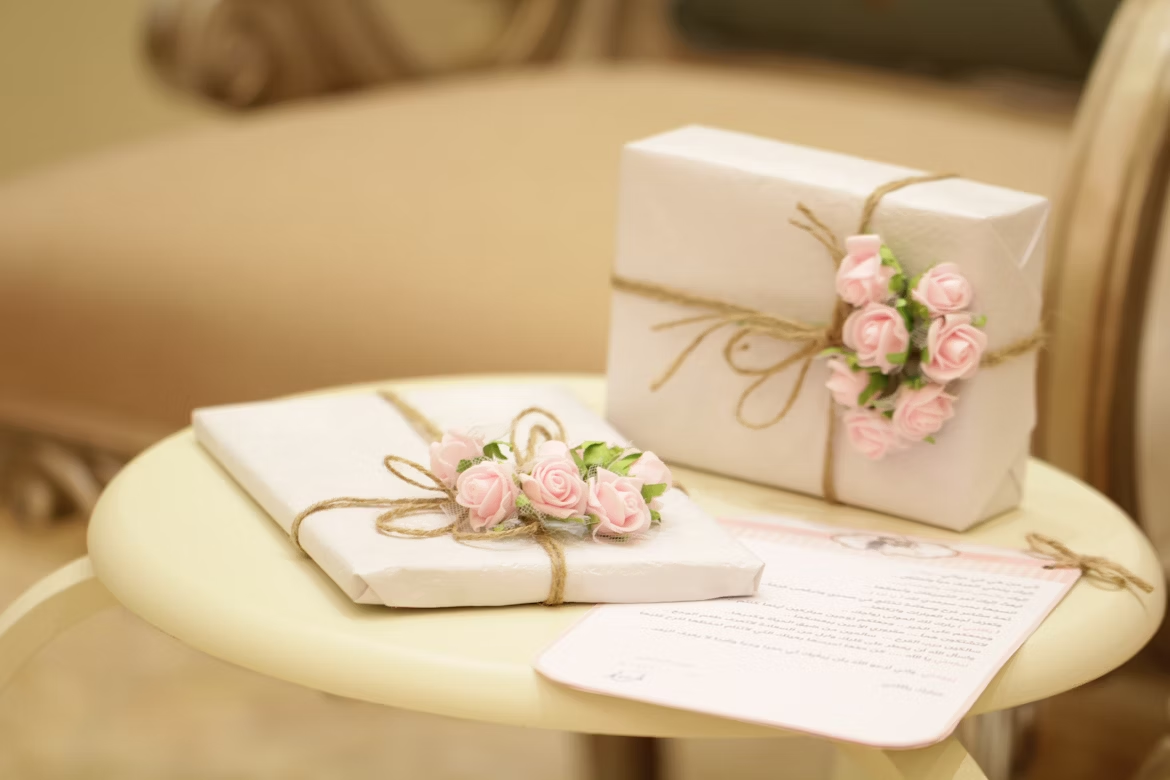
Getting married is an exciting milestone, and one of the most enjoyable parts of the celebration is receiving gifts from family and friends. Thoughtful presents can help couples start their new life together, but what happens when a gift doesn’t quite fit your lifestyle, taste, or needs? Many newlyweds feel obligated to use everything they receive out of gratitude, even when certain gifts aren’t practical, useful, or even safe for them.
According to the Office for National Statistics, there were about 246,897 weddings in 2022 in England and Wales. With anywhere from 60-150 guests for a medium sized wedding, that’s a lot of gifts every year.
As a couple getting married, the more the merrier, but at the same time, wedding gifts shouldn’t create unnecessary stress for you. Here’s why you don’t have to feel guilty about setting some gifts aside, repurposing them, or even passing them on to someone who will truly appreciate them.
Reason #1. Not Every Gift Fits Your Style and Personal Choices
One of the biggest reasons you don’t need to keep every wedding gift is that not everything will match your personal style or fit into your lifestyle. While gifts are given with love and good intentions, that doesn’t mean they will always align with what you want or need.
For instance, you might receive a set of fine china when you’re more of a casual, everyday-dish kind of person. Or perhaps a family member gives you a bulky kitchen appliance that takes up too much counter space in your small apartment. Even if the gift is expensive or high-quality, it won’t bring you joy if it doesn’t serve a purpose in your daily life.
Likewise, some people tend to give baby-related products like baby formula and toys to couples with babies. Despite these being kind gestures, people forget that parents want to have a choice in what they give their infants.
So if your sister-in-law decided to give you a carton of Similac, you don’t have to feel obligated to use it at all. You may prefer to exclusively breastfeed your baby after hearing about the Similac lawsuit cases.
As TorHoerman Law explains, brands like these have been accused of leading to life-threatening conditions like NEC. As a parent, you are well within your discretion to simply refuse to use gifts that can harm your close ones. Sure, you can ‘accept’ the gift of being polite, but never feel obligated to go against your gut (or your kids).
On average, people spend about $150 (£115) on a wedding gift. That number changes based on how close or distant you are from the couple. However, you don’t have to use a gift just for the sake of it, regardless of whether it’s £115 or £1,500.
Reason #2. Sentimental Value Doesn’t Mean Obligation
Some wedding gifts hold deep sentimental meaning, making it even harder to decide what to do with them. A handmade quilt from an elderly relative, a decorative vase passed down from a family member, or even a framed photo from a close friend may all come with emotional weight. However, just because a gift has sentimental value doesn’t mean you’re obligated to keep it forever.
Over the course of your life, you’re always going to end up with things that have sentimental value for one reason or the other. However, since most of us don’t have the luxury of living in large mansions, the more you have, the more clutter you carry with you.
As Dn. Joseph Ferrari, a professor of psychology, notes that clutter impacts relationships and causes lots of stress. In other words, it doesn’t just affect your personal space, it also influences emotional and social dynamics. In other words, clutter from lots of unnecessary gifts is the last thing you want in a new relationship.
It’s important to remember that sentiment is about the thought behind the gift, not the physical object itself. If a present doesn’t serve a purpose in your home, you can still express gratitude without feeling pressured to keep it.
You might take a photo of it to remember the sentiment before passing it on, or you could repurpose it in a way that better suits your needs, like turning a gifted piece of fabric into something more practical for your home.
Some couples also struggle with receiving gifts that come with an unspoken expectation. For example, a relative might give you an heirloom dining set with the assumption that you’ll host holiday dinners at your house from now on. While traditions can be beautiful, they shouldn’t become burdensome obligations. If a gift comes with pressure rather than joy, it’s worth considering whether keeping it is truly the right choice.
Reason #3. Re-gifting Isn’t a Dirty Word
There’s a common misconception that regifting is rude or thoughtless, but in reality, it’s a practical and sustainable way to ensure a gift finds the right home. If you receive a wedding gift that doesn’t fit your lifestyle, regifting allows someone else to enjoy it instead of letting it collect dust in a closet.
As Diane Gottsman, an etiquette expert, states, under the right circumstances, re-gifting is a smart and practical option. Mirza Grotts, another etiquette expert, notes that the golden rule is to give a gift that you would want to receive or don’t give at all. So, if you’re unlucky enough to end up with a terrible gift, it might be better to simply donate it rather than give it to a friend.
The key to regifting respectfully is to do it thoughtfully. Avoid giving a gift back to the original giver or someone in the same social circle who might recognize it. Instead, consider passing it on to a friend, family member, or even a charity that could benefit from it. For example, if you receive multiple sets of towels or dishware, you could donate them to a newly engaged couple or a shelter in need.
Regifting is also a great way to reduce waste and promote mindful consumption. Many people buy new gifts when they already have perfectly good, unused items sitting at home. By regifting, you help prevent unnecessary purchases while ensuring that the item gets used and appreciated.
At the end of the day, a gift should bring happiness to the person who owns it. If that happiness comes from giving it to someone else who will enjoy it more, then there’s nothing wrong with that choice.
Frequently Asked Questions
1. How do you accept money for a wedding?
Accepting money for a wedding can be done through a honeymoon fund, a cash registry, or simply letting guests know you prefer monetary gifts. Adding a polite note on your wedding website or invitation can help guide guests without making it awkward.
2. Is regifting presents a good idea?
Regifting can be a thoughtful and practical way to ensure an unused gift finds a home where it will be appreciated. The key is to do it with care—avoid regifting within the same social circle and choose recipients who will truly enjoy the item.
3. What is the best gift for a married couple?
The best gift for a married couple depends on their lifestyle. Personalized keepsakes, experiences like a romantic getaway, or practical items like high-quality kitchenware are great choices. A cash gift or contribution to their honeymoon fund is also a thoughtful and flexible option.
To put it simply, wedding gifts should add joy to your life, not stress. So, it’s okay to be selective about what you keep, repurpose, or pass on. A thoughtful gift is about the giver’s kindness, not an obligation. At the end of the day, don’t feel bad about making choices that fit your needs and the new life you are starting.