By Yanique, Founder & Designer, Dreamers & Lovers
Brides searching for a vintage-inspired wedding dress are not looking for a replica. They are looking for a feeling. Something that evokes the craft and intentionality of an earlier era without the constraints that came with it. The distinction matters because it changes what you should be looking for.
A vintage wedding dress is a garment from a specific decade. It carries the construction methods, fabric technology, and silhouette conventions of that period. An antique-looking wedding dress borrows the spirit of those eras and translates it through modern pattern-making, modern fabric, and a modern understanding of how a bride wants to move on her wedding day.
The Details That Signal “Vintage” to the Eye
Certain design elements read as vintage immediately, regardless of when the dress was actually made.
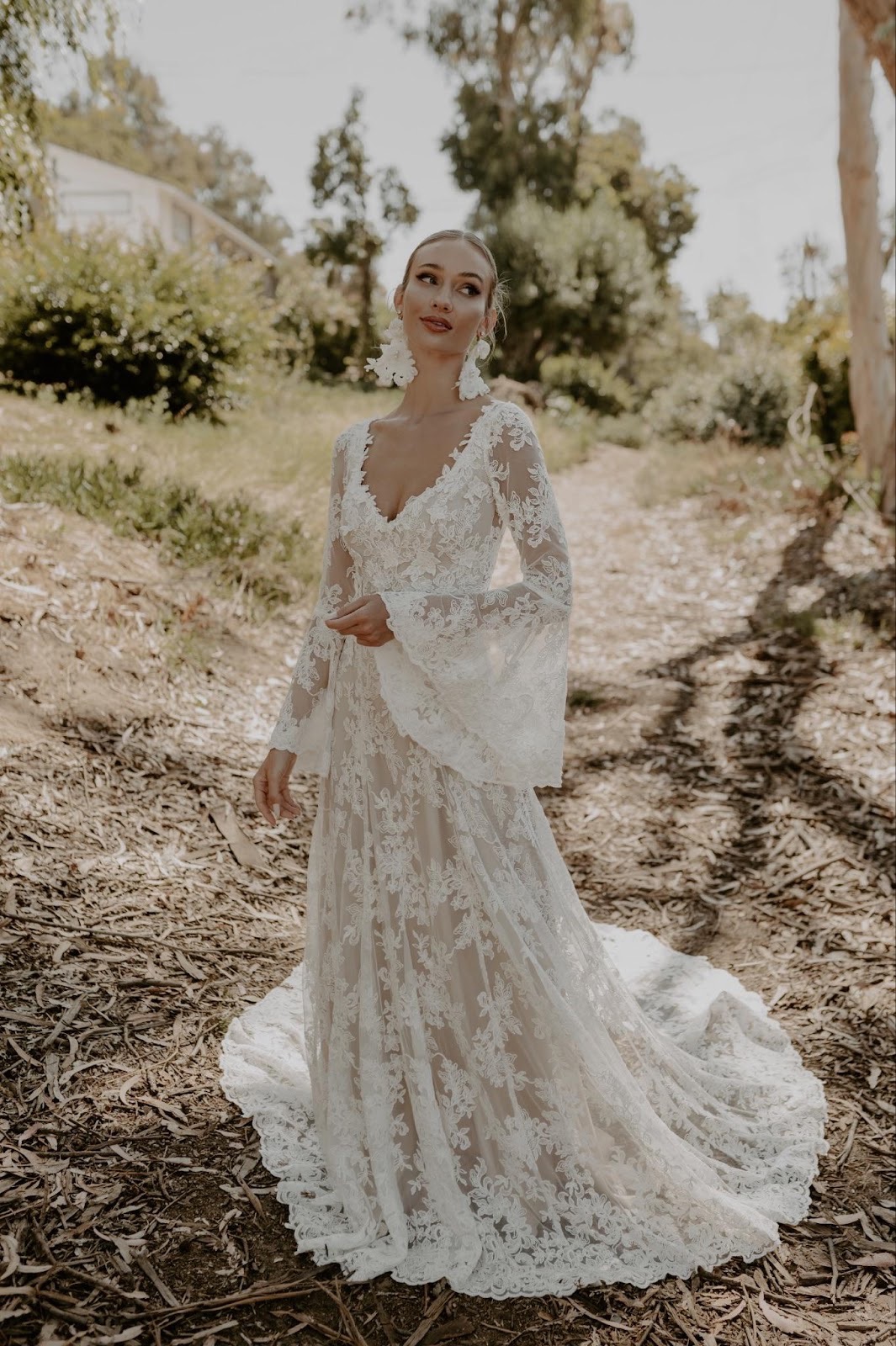
Scalloped lace edges. Before laser-cut lace became standard, lace borders were finished with hand-cut scallops. This small detail signals handwork and is one of the most reliable visual markers of vintage-inspired design. When you see scalloped hems on a bohemian wedding dress, the eye registers it as artisan-made even if the viewer cannot articulate why.
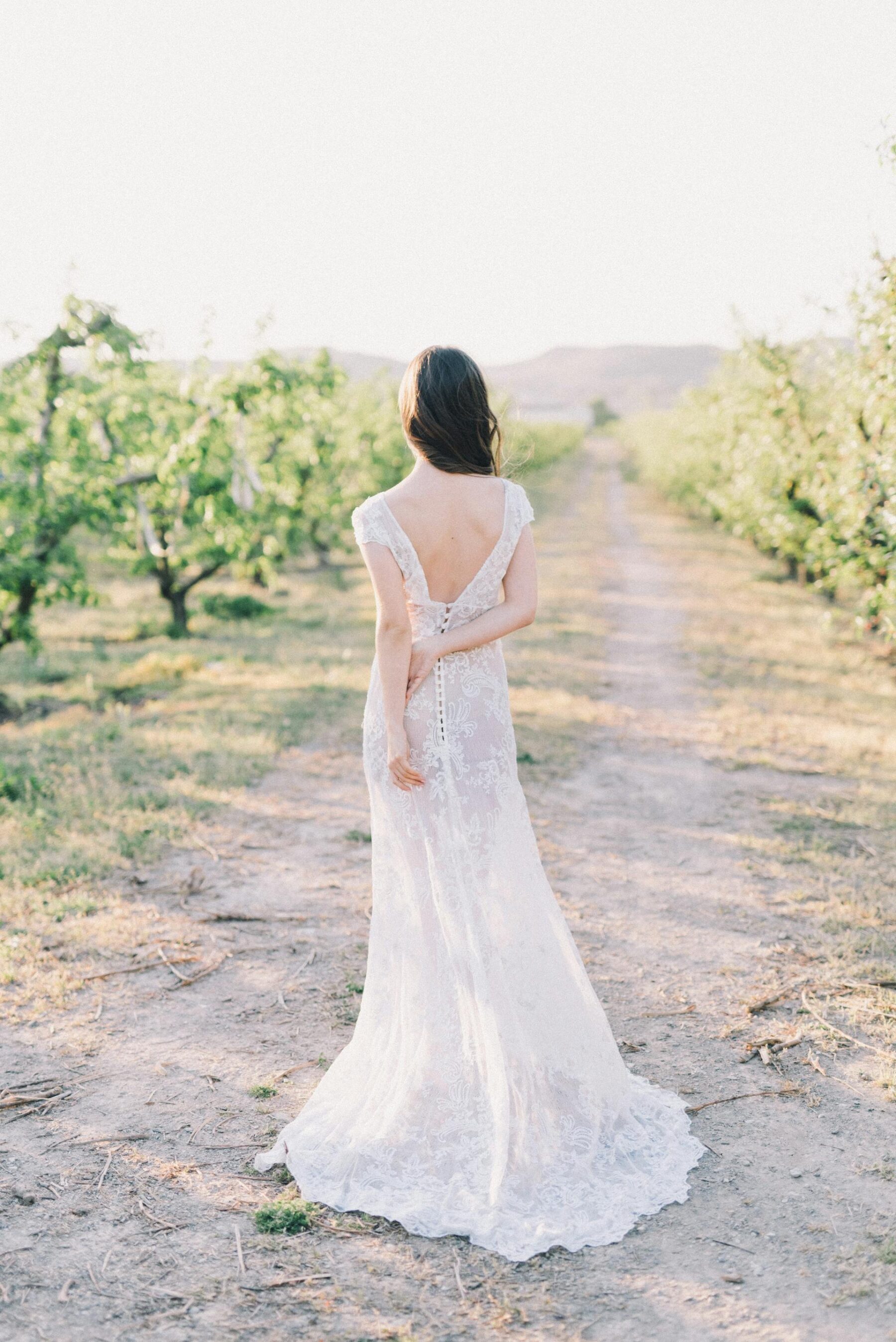
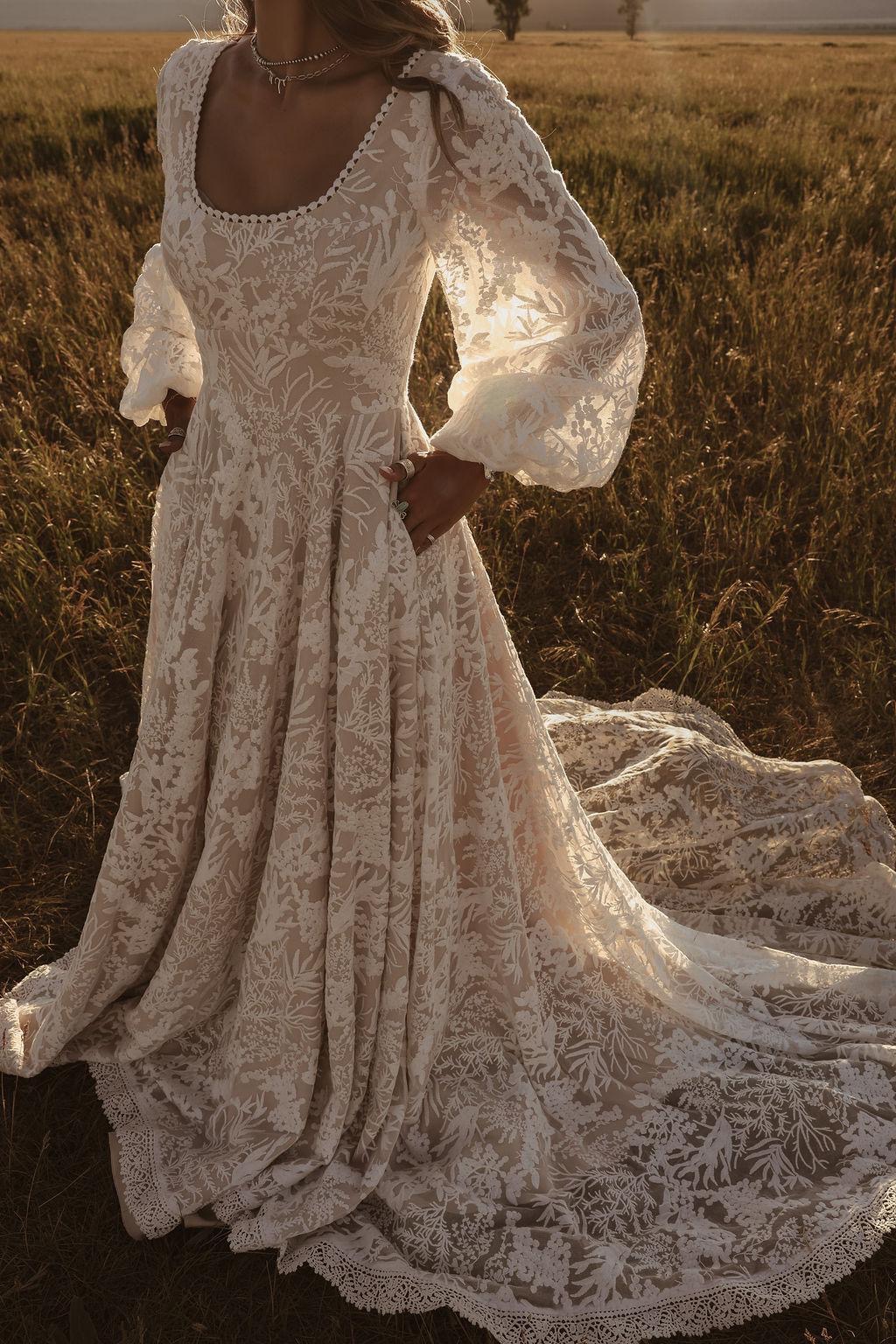
Botanical lace patterns. Victorian and Edwardian lace featured motifs pulled directly from nature: ferns, flowers, trailing vines. This is distinct from the geometric or abstract lace patterns common in modern bridal. A lace pattern that looks like it grew rather than was engineered is the foundation of a convincing vintage aesthetic.
Natural fiber texture. Vintage gowns were made from cotton, silk, and linen because those were the available materials. The matte, soft-focus quality of natural fibers photographs differently than synthetic. If a dress has a visible sheen under artificial light, it will not read as vintage regardless of its silhouette.
Bell and bishop sleeves. The 1970s bohemian bridal movement introduced these sleeve shapes, and they remain the most direct reference point for brides who describe their aesthetic as “vintage boho.” A long sleeve wedding dress with a wide bell cuff in cotton lace immediately connects to that era.
What Actually Makes a Dress Look Dated vs. Vintage
There is a line between vintage-inspired and dated, and it comes down to proportion and fit.
Dated dresses tend to reproduce the exact proportions of the original era. Enormous puffed sleeves from the 1980s, for example, are a period-accurate choice that most modern brides would not wear. A vintage-inspired approach takes the concept (volume in the sleeve) and scales it to modern proportions (a soft bishop sleeve that gathers at the wrist rather than a structured puff at the shoulder).
Fit is the other factor. Vintage construction often prioritized the silhouette of the dress over the comfort of the wearer. Boned bodices, rigid waistlines, and heavy petticoats created a specific shape but limited movement. A modern vintage-inspired dress achieves a similar visual effect through pattern-making and fabric choice rather than restrictive structure. A cotton lace A-line with princess seams can create the fitted-bodice-to-flowing-skirt proportion of a 1970s gown without a single bone or wire.
Where Bohemian and Vintage Intersect
The bohemian bridal aesthetic and the vintage bridal aesthetic share a common ancestor: the 1960s and 1970s counter-cultural movement that rejected formal bridal conventions. Brides in that era chose cotton, lace, and flowing silhouettes specifically because those materials and shapes felt personal rather than performative.
That is why a romantic bohemian wedding dress so often reads as vintage even when it was designed and sewn this year. The values are the same: natural materials, visible craft, comfort, and a refusal to treat the bride as a mannequin for someone else’s idea of formal beauty.
For brides drawn to vintage bridal dresses, the search is not about finding something old. It is about finding something that carries the weight and intention of handmade craft in an industry that has largely moved to mass production. The question is not “what decade does this dress come from?” The question is “does this dress feel like someone made it with care?”
How to Evaluate Vintage-Inspired Dresses
When shopping for a gown that captures this aesthetic, focus on three things:
The lace. Is it a natural fiber or synthetic? Can you see the individual pattern motifs, or does it blur into a generic texture? Does it feel soft against the skin, or does it have a plastic quality? The fabric is the single biggest determinant of whether a dress reads as vintage or costume.
The construction. Turn the dress inside out if you can. Are the seams finished cleanly? Is the lace pattern matched at the seams? Are there details like French seams or hand-stitched hems? These construction markers are invisible in photos but define the quality of the garment.
The movement. Vintage-inspired dresses should flow. If the skirt is stiff, the sleeves are rigid, or the bodice does not allow you to raise your arms comfortably, the dress is referencing the restrictive era of bridal fashion, not the free-spirited one.
The best vintage-inspired wedding dresses feel effortless. They borrow the beauty of the past without borrowing its limitations.
A Note on Preservation
One practical advantage of vintage-inspired dresses made from natural fibers: they preserve better. Cotton lace stored in acid-free tissue in a cool, dark space will hold its color and texture for decades. Many synthetic laces yellow over time regardless of storage conditions because the polymer fibers oxidize. If part of your reason for choosing a vintage-inspired gown is the idea that your daughter might wear it someday, the fabric matters as much as the design. A well-made cotton lace dress is not just referencing the past. It is built to become part of it.
Yanique is the founder and designer of Dreamers & Lovers, a California-based bohemian bridal atelier that has been handcrafting cotton lace wedding dresses since 2012. Visit the showroom in Riviera Village, Redondo Beach or explore the home try-on program.