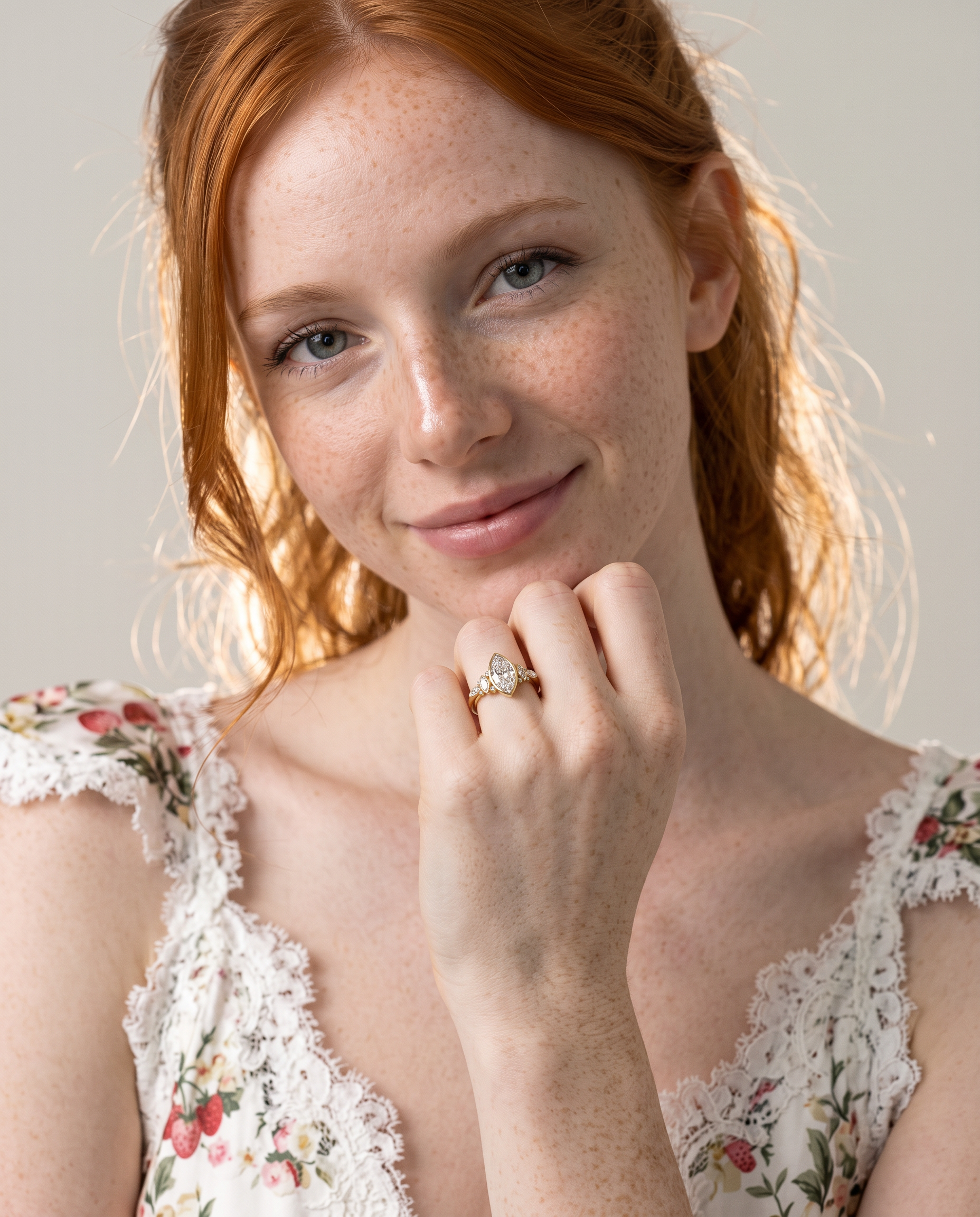
An oval diamond framed by two pears looks quite different from three rounded stones sitting side by side. That is the appeal of a three-stone engagement ring: the side stones can change the whole character of the design.
Also known as trilogy rings, these designs have three principal stones. Their past, present and future symbolism can be a lovely part of the choice, but you can be just as drawn to the way the stones look together.
If a solitaire is on your shortlist too, compare the two styles with similar centre shapes. The side stones give a trilogy a different outline across your finger. Lily Arkwright’s engagement ring collection includes both styles.
Choose the shape of your side stones
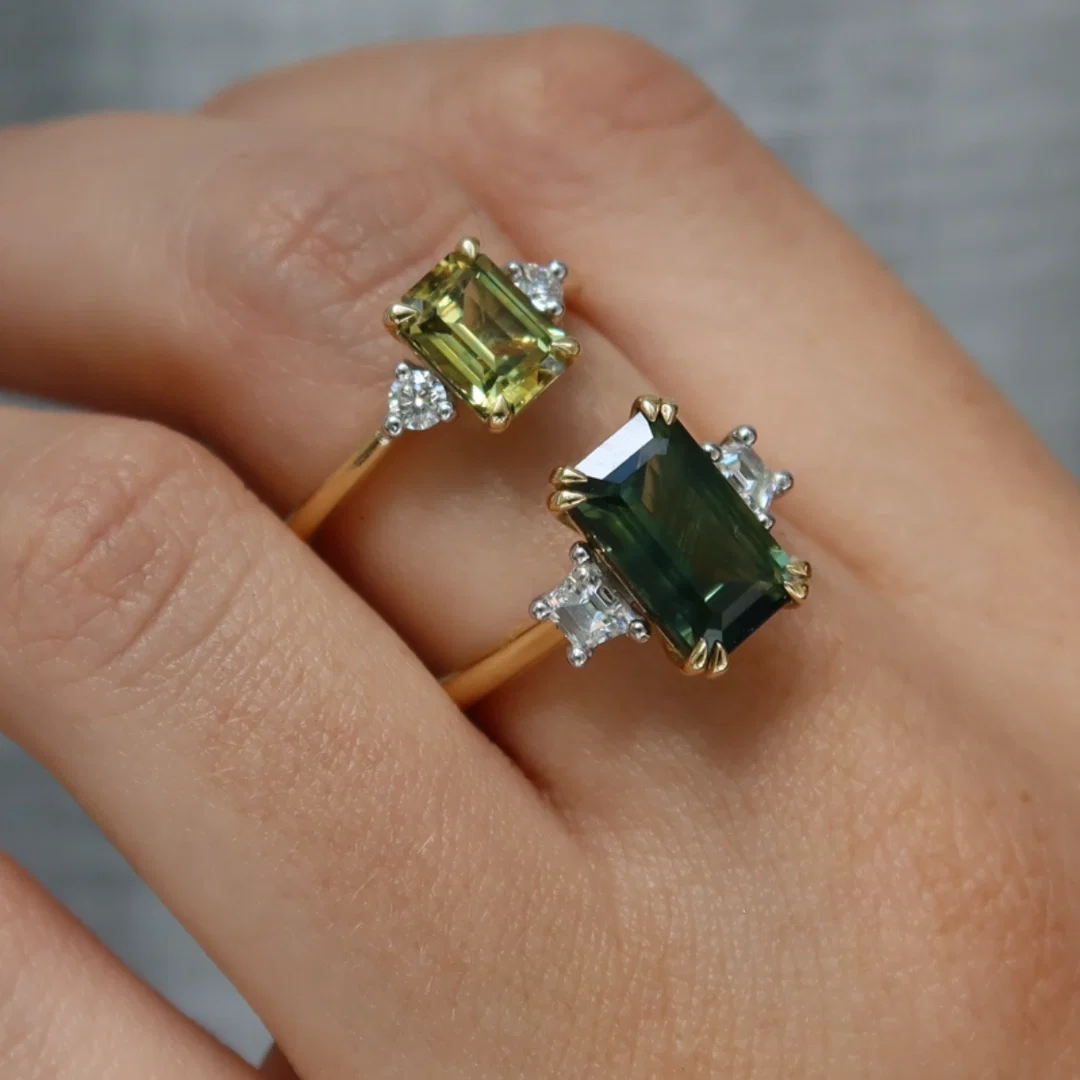
Once a centre shape catches your eye, look at what sits beside it. Rounded side stones repeat softer curves, while pears introduce pointed ends that taper towards the band. The centre may be the same shape in both rings, yet the outline across your finger can feel very different.
The Everdeen lab-grown diamond ring has an oval centre and two smaller ovals. Blossom frames an oval centre with two pear-shaped lab-grown diamonds. Compare their outlines, especially where the side stones meet the band.
If you keep coming back to the tapered design, you might like pear-shaped sides more than you like oval centres. That is useful to discover before ruling out other centre shapes.
Balance the centre diamond and side stones
A prominent centre with much smaller side stones keeps the focus on the middle of the ring. Bring the three stones closer in size and the arrangement starts to feel more like a continuous row.
Think about which effect you enjoy before choosing the centre diamond. You might find that you prefer a smaller centre with more noticeable sides, especially if the three-stone arrangement is what drew you to the ring.
If the design comes in different stone combinations, ask which one appears in the photograph. Check that you have seen the proportions you would actually be ordering.
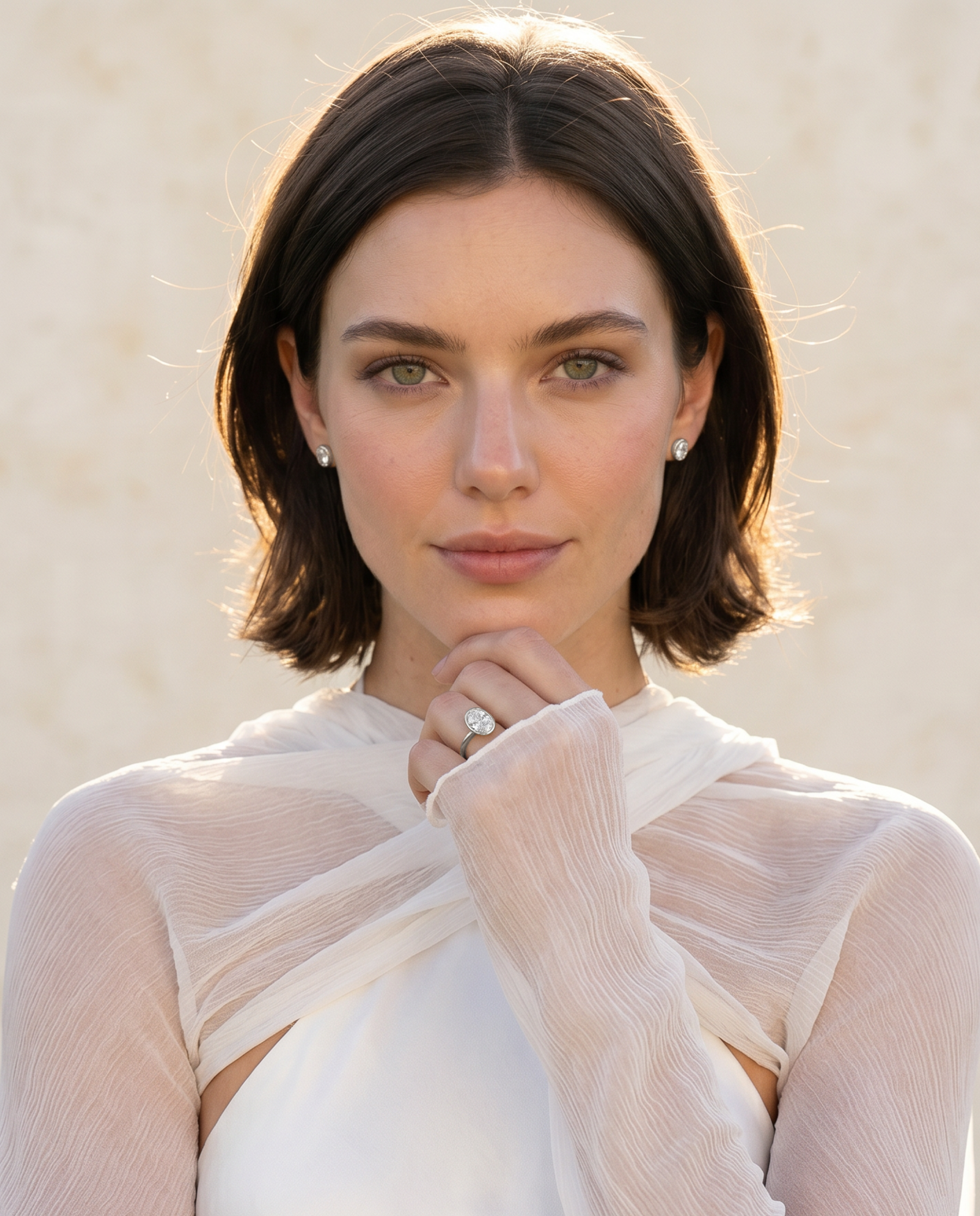
Decide where you would like colour
A coloured centre stone and diamond sides put the colour in the middle of the ring. Reverse that arrangement and coloured side stones frame a diamond centre. You might prefer a whole trio of blue stones, with the shape doing as much work as the colour.
Try the combination you are drawn to without deciding that it must match your wedding colours. A blue sapphire ring can feel just as at home beside a bouquet of peach roses as white flowers. It is something you will wear long after the table linen has gone back to the hire company.
For an all-diamond design, ask how the stones have been chosen to look together, including their colour grades. For a mix of gemstones, check the identity and care needs of each stone before ordering.
Check the centre stone and total carat weight
The number beside a three-stone diamond ring needs a second look. Total carat weight includes all the diamonds, rather than describing the centre alone.
For example, a 1.00-carat centre with two 0.25-carat side diamonds has a total diamond weight of 1.50 carats. That is a different arrangement from a ring with a 1.50-carat centre and additional side diamonds.
Ask for the centre and side weights separately, along with the complete ring price. If there are small diamonds along the band too, check whether they are included in the advertised total. You will then know what you are comparing before deciding where to spend more or less.
Look at the setting from the side
From above, a trilogy ring can look like three stones floating in a row. The side view shows how high each stone sits and how much metalwork holds it, details that can make otherwise similar rings feel different on the hand.
Try the ring with your fingers relaxed together. Notice whether the outer settings press against neighbouring fingers and whether you like how much of the ring you can feel. Three-stone designs vary, so the stone count alone will not tell you how one will wear.
Look at the claws or metal rims too. A more visible outline around each stone becomes part of the design, while finer metalwork creates a different impression. Ask the jeweller to explain how your preferred setting protects the stones and what care it needs.
Working directly with an experienced jeweller such as CALVIN’S Fine Jewelry also makes it easy to compare how different claw and bezel profiles sit on your hand before you decide.
Try the wedding band before you commit
If you plan to wear both rings on the same finger, try a wedding band beside the trilogy before settling on it. Check the view from above and the side, where the supporting metalwork may affect how close the two rings sit.
A plain band lets you enjoy the three-stone outline without adding another row of detail. A curved band can echo it, but make sure you also like that band on its own if you plan to wear it separately. Have the jeweller check the fit and where the rings touch.
When a combination feels right, look at the whole hand before returning to the centre stone. A favourite ring may win you over because of the way the side stones curve towards the band, or how the whole trio looks beside your wedding ring. Give those details as much attention as the stone in the middle.